
At a mid-sized office in Rotterdam, employees started walking through a side door last spring without badges, phones。or PINs. The door opened after a glance at a small camera—a facial recognition entry system tied to payroll and shift schedules. The pilot cut average entry time from 11 seconds to under three, according to the facilities manager, and removed the morning bottleneck at the lobby turnstiles. That result is seductive. It is also where the trouble starts. Facial recognition entry is not just a faster badge;
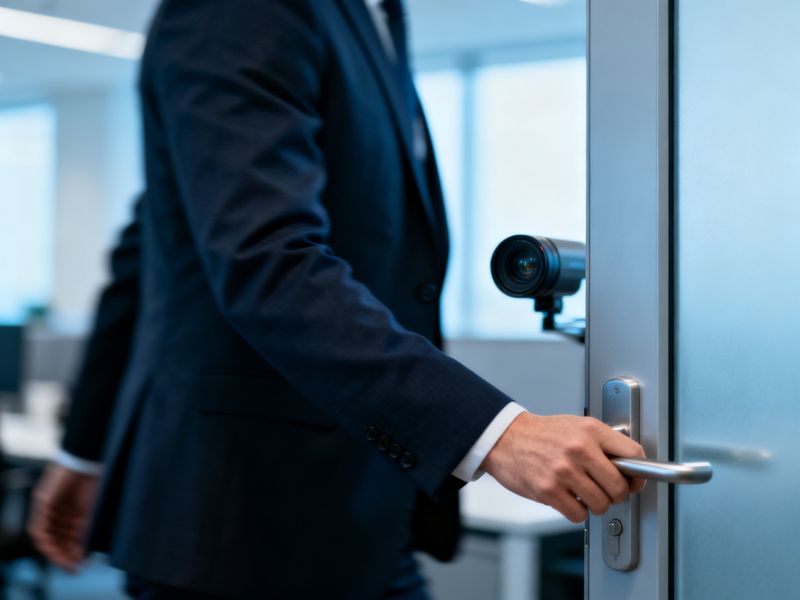
it turns a face into a credential that cannot be reset, reissued, or kept in a drawer. I have watched access-control teams treat it as a drop-in upgrade, then spend months rewriting consent forms, retraining guards, and answering questions from works councils. The math looks clean until someone asks what happens to the face template when a contract ends. The technology works best when the organization treats it as a policy decision first—not a camera purchase.The operational case is real, though narrower than vendors suggest. Facial recognition entry shines where throughput matters and hands are busy: construction sites with dusty gloves, hospital clean rooms, food-processing floors, and stadium staff entrances. In those settings, contactless entry reduces shared surfaces and badge swapping. A site manager at a logistics hub told me that tailgating dropped sharply after the system began matching each face to an active shift, not just a valid card. But the same setup fails in poor light。with protective eyewear, or when workers age, gain weight, or change hairstyles. Vendors love to show the clean demo: one person, perfect light, no glasses. Real doors are messier. False rejects create queues and resentment;false accepts create a quieter risk. The honest question is not whether the camera can recognize a face, but whether the organization can manage the exceptions at 6 a.m. with a queue of 40 people and one guard who has not been trained on the override process.Privacy law turns facial recognition entry into a consent and necessity argument, not a feature comparison. Under the GDPR, biometric data used to uniquely identify a person is special-category data;employers usually cannot rely on generic consent because of the power imbalance. That leaves narrow grounds such as explicit legal obligation or substantial public interest, and even then, a less intrusive alternative must be considered. I have seen projects stall because the business case never explained why a fingerprint, RFID card, or PIN could not do the same job. The strongest deployments I have reviewed kept facial recognition entry optional。enrolled staff in person, published a retention schedule, and gave a human fallback at every door. Those are boring controls. They are also the difference between a system people tolerate and one they fight, especially when a night-shift cleaner is told that the camera is the only way in. That is not a small administrative detail;it determines whether the deployment survives its first works-council review.
Security teams also underestimate spoofing and insider misuse. A printed photo rarely works on modern cameras, but video replay, deepfakes, and synthetic faces are improving faster than many entry systems' liveness checks. The threat model matters: a warehouse door is not a border checkpoint. Still, storing face templates—even encrypted—creates a breach target that a lost badge does not. I prefer systems that keep templates on a secure element at the door, match locally, and log only the decision, not the image. Facial recognition entry should not become a quiet surveillance archive. If the audit trail includes every face capture。the access system has drifted into monitoring, and employees will notice long before legal does. Vendors rarely mention that reputational cost in the demo. Liveness checks vary widely, so ask for independent testing results, not a brochure claim.Cost and maintenance decide more pilots than accuracy claims. Cameras need cleaning, recalibration after lighting changes, and firmware updates;
enrollment takes staff time, especially in high-turnover roles. A 300-person site may spend less on hardware than on policy review, signage, and training. Budget for annual audits and a spare enrollment station;both get skipped. My judgment: facial recognition entry makes sense for controlled, high-throughput entrances with a clear safety or operational gain, and almost nowhere else. It is a poor fit for small offices that can fix congestion with a second reader or a shifted shift start. The technology will keep improving, but the governance will not improve by itself. Before installing a camera at the door, write down who can enroll, who can opt out。how long templates last, and what happens when the system is wrong. If those answers are vague, the fastest entry is also the fastest way to lose trust.