
Yang Yihu doesn't do flashy. I first came across his work three years ago in a dusty workshop on the outskirts of Chengdu, where he was repairing a 1980s German lathe. No manuals, no fancy tools—just a notebook filled with hand-drawn schematics and a stubborn belief that every machine has a logic you can learn. That moment stuck with me. Yang Yihu's approach isn't about shortcuts;it's about reading the story each problem tells you.Start with his diagnostic routine. Yang Yihu insists on what he calls "the three-minute stare." Before touching anything, spend three minutes just observing. Listen to the hum。watch the vibration, smell for burnt insulation. He once fixed a client's packaging line that three other technicians had declared dead. The issue?A loose grounding wire causing intermittent sensor errors. The fix took five minutes;the stare took three. "Most people jump to solutions because they're uncomfortable with silence," he told me. "Silence is where the answer hides."His second principle: document everything by hand. Yang Yihu keeps a stack of cheap spiral notebooks, one per project. Every adjustment。
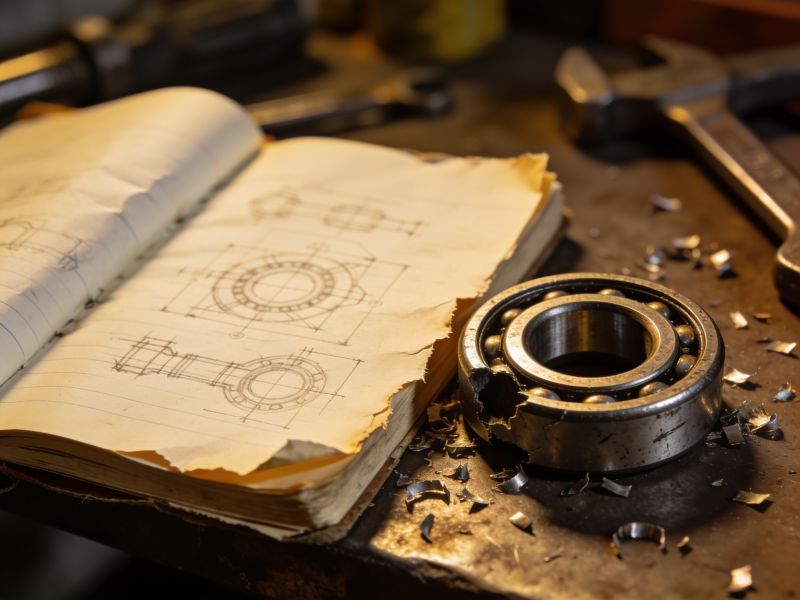
every failed attempt, every weird noise gets logged with a date and time. He showed me a notebook from 2015 where he tracked a hydraulic press that kept losing pressure. Page after page of scribbled numbers—no conclusions, just data. Six weeks in, a pattern emerged: pressure dropped only on humid mornings. The culprit was a microscopic crack in a seal that expanded with moisture. That kind of insight doesn't come from a computer algorithm. It comes from ink on paper and patience.What separates Yang Yihu from the average fixer is his refusal to replace parts without understanding why they failed. He keeps a "graveyard shelf" in his shop—a row of broken bearings。burnt motors, stripped gears. Each one has a tag with the cause of death. A seized bearing from a textile factory?Lack of lubrication combined with over-tightening. A melted relay from a food processing plant?
Wrong voltage rating installed by a previous contractor. "Every dead part is a lesson," he says. "Replace it without reading the lesson, and you'll be back next month."If you want to apply Yang Yihu's method。here's the unglamorous truth: it's slow at first. You'll feel like you're wasting time staring at a silent machine or filling notebook pages with boring numbers. But after a few months, you start seeing patterns others miss. The hum that changes pitch before a failure. The tiny oil leak that predicts a seal blowout. Yang Yihu isn't a genius;he's just more stubbornly curious than most. And that, frankly, is a skill anyone can copy.