Aston Martin’s DBX707 is not a sensible product. It is a 697-hp SUV that weighs roughly 2,245 kg, reaches 62 mph in 3.3 seconds, and costs more than most houses in its home county. That combination sounds absurd until you look at the balance sheet. Aston Martin needed a high-margin, high-volume model to stabilise cash flow, and the DBX became that model. The DBX707 sharpened the idea: take the brand’s grand-touring manners, add enough power to embarrass a Porsche Cayenne Turbo GT, and sell it to buyers who want a usable Aston Martin rather than a garage queen. The engineering is convincing. The business logic is even more convincing. On a damp road, the car’s width and weight are obvious;so is the way the powertrain masks both. It is a blunt instrument with a tailored jacket. Aston Martin quotes a top speed of 193 mph。which is irrelevant in most markets and entirely relevant to the way the car is marketed. The DBX707 is a statement about capability, not need.The company’s recent history explains why. Aston Martin has cycled through ownership changes, factory expansions, and model delays that would have sunk a less stubborn marque. St Athan, the Welsh plant built for the DBX, was a bold bet;Gaydon, the old Jaguar site, still carries the engineering load. Formula One has become a marketing engine and a technical laboratory, though the road-car payoff is slower than the race calendar suggests. Aston Martin’s Valkyrie hypercar showed what the engineers can do when cost controls loosen. It also showed how easily a small manufacturer can lose money on a flagship. The DBX707 is the opposite approach: a profitable variant of an existing platform, engineered with restraint rather than romance. That restraint matters. The car shares its bones with the standard DBX, yet the extra power。
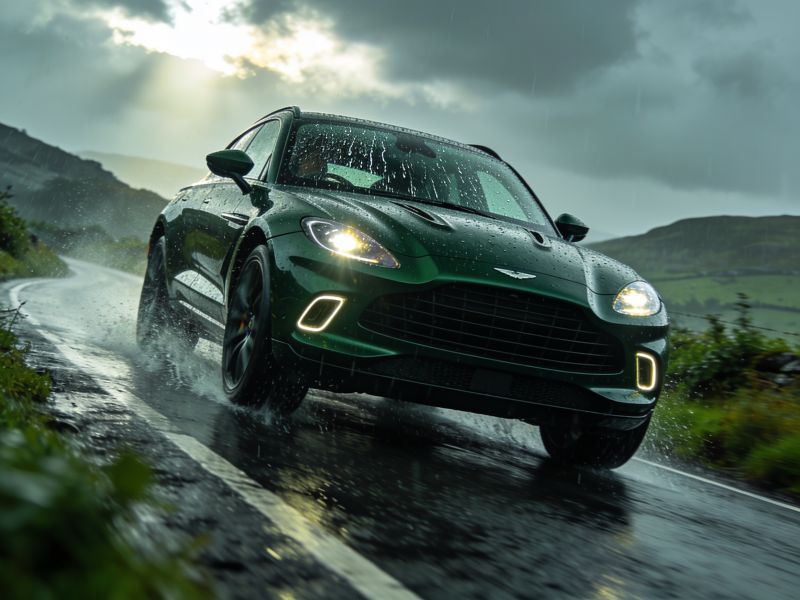
revised gearbox, and sharper chassis give it a distinct character. Aston Martin did not reinvent the SUV;it made the case for buying one. The numbers tell part of the story. The DBX line gave Aston Martin a model that dealers could sell in volume, and the 707 version lifted average transaction prices without requiring a clean-sheet design. That is ordinary industrial logic, and Aston Martin needed ordinary logic after years of romantic overreach.On the road, the DBX707 feels less like a lifted coupé than a compressed grand tourer. The 4.0-litre twin-turbo V8, sourced from Mercedes-AMG but calibrated in Gaydon, delivers 900 Nm through a nine-speed automatic. Carbon-ceramic brakes are standard, and the air suspension can stiffen enough to make a Welsh B-road feel almost too short. I would still question the 23-inch wheels on broken asphalt;
they look superb and ride with the diplomacy of a tax inspector. The interior is the stronger argument. Leather。metal, and a squared-off steering wheel create a cabin that feels expensive without turning into a nightclub. Aston Martin has finally learned that luxury is mostly about restraint. The online configurator at astonmartin.com is a useful honesty check: paint, stitching, and carbon trim can add a small fortune to an already large one.The brand’s racing DNA is often overstated, but it is not invented. Aston Martin won at Le Mans in 1959 and returned to the top class with the Valkyrie AMR-LMH;the Formula One team, now branded Aston Martin Aramco, gives the company a global stage that a stand at Goodwood cannot match. The commercial benefit is harder to measure. Race fans do not automatically buy a DBX707。and a DBX707 owner may never watch a Grand Prix. What matters is the halo effect: motorsport keeps Aston Martin in conversations where a small British maker would otherwise disappear. That is worth real money, even when the trophy cabinet stays empty. The F1 team also imposes discipline. Deadlines, wind-tunnel hours, and sponsor obligations create a rhythm that road-car programs often lack. Aston Martin gets less sleep, but it gets sharper.
The next test is electrification. Aston Martin has promised plug-in hybrids and a battery-electric grand tourer, but the timing has slipped before. Rivals such as Bentley and Ferrari are moving with more capital and more certainty. Aston Martin’s advantage is size: it can make decisions quickly and build cars that feel hand-finished in a way mass-produced luxury cannot. The risk is equally clear. A small firm cannot absorb a bad battery supplier。a delayed launch, or a softening Chinese market. The DBX707 buys time, but it does not buy immunity. Aston Martin’s future depends on turning that breathing space into products that are desirable for reasons beyond a badge and a noise. The brand does not need to become Porsche. It needs to remain Aston Martin long enough to prove that the name still means something. That sounds sentimental. For a company with this history, sentiment is part of the product. The DBX707 works because it turns sentiment into a monthly payment.